 Myron Wittmer●
We Are Not Building Alone Anymore
Four cabinet shops are using Grainwork now. The vision has not changed because users showed up. It just runs through real requests now instead of coming only out of my head.
Four cabinet shops are using Grainwork now.
Almost every one of them said some version of the same sentence when they first saw it. You are further along than I thought you would be.
I will take that direction every time. The other version of that sentence is a lot worse. If somebody shows up expecting more than what is actually there, you spend the rest of the relationship apologizing and walking things back. I would rather people be surprised in the good direction, especially this early, and especially with people who will be trusting us with real work eventually.
They also found bugs quickly. Both of those things are true and I would rather tell you both. We are moving faster than most people assume, and we are still early with obvious pieces missing.
What actually changed
The feature list is not the interesting part of this week.
For months, the roadmap came out of my own head. I have spent years inside other shops fixing their setups, so I am not guessing blind. But memory is not the same thing as a live signal. When you build alone, you decide what matters, you build it, and nobody tells you whether you were right. You just move to the next thing on your own list.
That changed. Now there are people opening Grainwork on a Tuesday morning trying to get actual work done, and when something is missing or confusing, they tell us.
The requests are more specific than anything I would have written for myself. Somebody working a real job hits things in an order you cannot predict from the outside. They are not evaluating a feature list. They are trying to finish something, and they run into the thing that stops them.
Honestly, it is just more fun. Building in a vacuum for months takes a certain amount of stubbornness. Building because four shops are waiting on something specific is a much better feeling.
The requests do not set the direction
I want to be careful about how that sounds, because there is a version of beta testing where the software slowly turns into whatever the last person asked for.
That is not what we are doing.
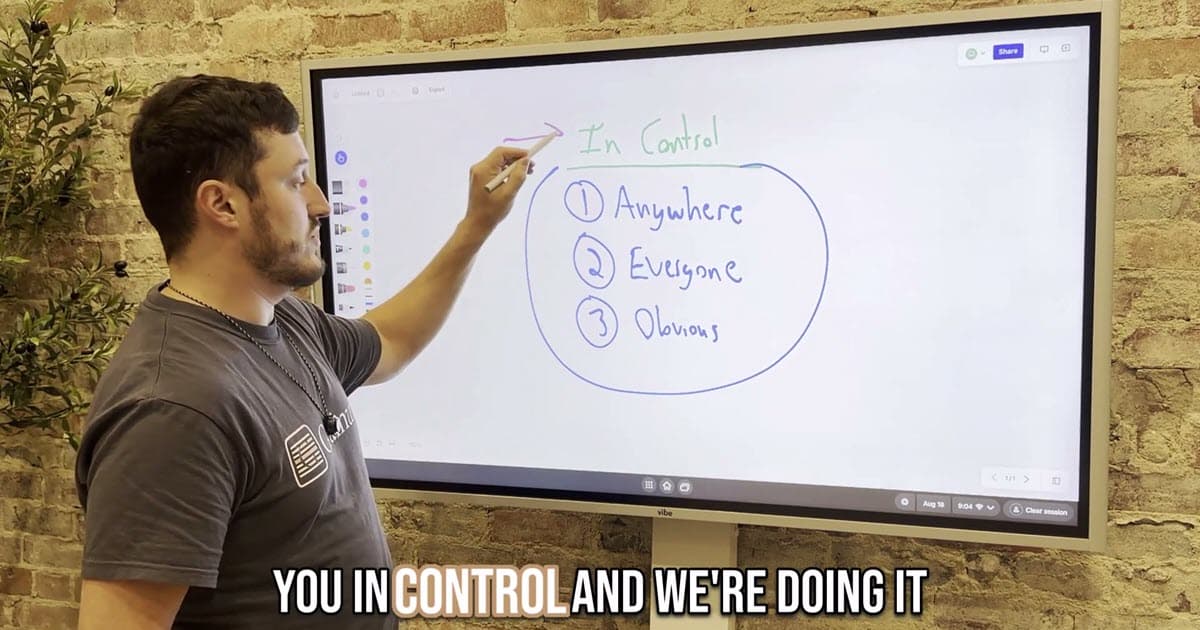
We recorded a video recently that walks through what we are building around. (you can see it on home page or about page)
Three ideas, and they have not moved:
Anywhere. Running your software should not be somebody else's job. No server in the corner, no IT company, no license codes. You open a browser and the job is there, and it is live.
Everyone. Everybody who touches a job should be able to see it, not a parts printout from two weeks ago. Shop seats are free. You pay for the people designing the job.
Obvious. Every feature gets one test before we build it. Can almost anybody figure this out and use it on their own? Not the power user. Not the one person in the shop who is good at computers.
Those three did not change when users showed up. What changed is that requests now tell us where the friction actually is, and those three still decide what we do about it.
A request usually tells you two things. What somebody was trying to accomplish, and where they got stopped. The first one matters more than the second. When somebody asks for a specific button, the useful question is what they were trying to finish, because a good share of the time the better answer is smaller and simpler than what got asked for.
And obvious is still a filter. If a request would only be usable by the one person in the shop who likes computers, it fails the same test it would have failed six months ago. Having a customer attached to it does not change that.
That rule costs us features. I am still fine with that.
The support loop
This is the part I did not expect to matter as much as it does.
Inside Grainwork there is a help button. You click it, categorize what you are sending as a bug or a feature request or a question, paste a screenshot, and send it. It comes to us as a ticket we can reply to and mark resolved, so nobody is left guessing whether their note went into a black hole.
The turnaround is what people have commented on, more than any single feature. One shop reported that a T wall was not showing correctly on the elevation. We fixed it and shipped it the next day. That is not a heroic story, it is a small bug. But if you have spent years filing tickets into a support queue and waiting on a release cycle, a one day turnaround is a different experience, and a few people have said so without being asked.
I want to be honest that this is easy right now. Four shops is a small number and there are two of us. Holding this at forty shops is a real problem and I do not have it solved yet. But it is the part of the business I care most about protecting, because slow support is a lot of what people are running from in the first place.
Where we are
Four shops in, and we are adding more every week in small batches on purpose.
Small batches are not a scarcity play. Every shop that comes in surfaces a pile of work, and I would rather actually fix what shop number four found than collect ten shops and make all of them wait behind the same list.
If you applied and have not heard from me yet, you are still on the list.
What is next
More shops every week. More machines, which matters more than the shop count right now, because one part on one machine proves the path works and parts on several machines is what proves it is real.
And more of the unglamorous work. The obvious missing pieces, the settings nobody can find, and the screens that need reorganizing before they need anything new added to them.
If you want to be part of this while it is still early enough that your opinion changes what gets built, the application is still open.

Myron Wittmer
Myron Wittmer is the founder of Grainwork and a cabinet software consultant. He’s spent years helping cabinet shops fix broken setups, untangle workflow problems, and get more control over the systems they rely on. Grainwork is his attempt to build the cabinet software he kept wishing he could recommend.